



Running ads on Facebook, Google, TikTok, or other major platforms is no longer just about creatives, bidding, and funnels. In 2026, ad account stability depends on something much deeper – your media buying infrastructure.
If your accounts keep getting restricted, ad approvals become unstable, or scaling breaks down after a few days, the issue may have nothing to do with the campaign itself. In many cases, the real problem is hidden inside your proxy environment, session behavior, and payment setup.
This is why more teams are rethinking the full structure behind their launches. Because stable ads are not built on creatives alone. Stable ads = Proxy + Payment + Behavior.
Introduction: Why Ad Accounts Get Banned Even When Everything Seems Right
If you run ads on platforms like Facebook, Google, or TikTok, you have probably seen the same pattern again and again:
- ad accounts get restricted without warning
- campaigns stop performing after a few days
- ad approvals become inconsistent
- accounts get disabled despite “safe” setups
A common scenario looks like this:
- you launch multiple ad accounts
- creatives are clean
- budgets are conservative
- warm-up is done properly
Some accounts scale. Others start dying within 48–72 hours even with “clean” setups.
At first, it feels random. So you recheck the offer, creatives, funnel, and campaign structure. But the instability stays. That is where most advertisers make the wrong diagnosis.
The hard truth is simple: many ad account bans are not caused by your campaigns. They are caused by how your infrastructure is perceived by the platform.
Why Most Advertisers Misdiagnose the Problem
Most advertisers focus only on what they can see:
- creatives
- targeting
- funnel performance
- bidding strategies
But ad platforms evaluate something deeper – the environment behind every action.
Every login, click, session, payment attempt, and behavioral sequence creates technical trust signals. Together, these signals define whether your account looks like a legitimate advertiser or a risky setup.
Example:
An advertiser runs identical campaigns across multiple ad accounts:
- same creatives
- same setup
- same budget
But the results are different:
- some accounts scale
- others get restricted within days
The difference is not always strategy. Very often, it is the network layer and media buying infrastructure behind each account.
The Hidden Layer: Network Identity in Ad Platforms
Modern ad platforms do not evaluate only the visible part of your setup. They also analyze technical signals such as:
- IP type – mobile, residential, or datacenter
- ASN – network provider
- geographic consistency
- session stability
- behavioral patterns
Together, these signals form what can be called network identity – a persistent technical profile that influences whether your activity looks trustworthy or suspicious.
That is why using a proxy for ads is not just about getting a different IP. It is about building a believable and stable environment over time.
How Ad Platforms Actually Detect Risk
At scale, platforms rarely react to one isolated action. They react to patterns. That is why the same anti-detect setup can behave differently depending on the quality of the infrastructure behind it.
1. Environment Clustering
Platforms identify relationships between accounts operating inside environments that are not properly isolated.
This usually happens when infrastructure lacks:
- clear separation between connections
- controlled usage patterns
- predictable session behavior
Example:
An advertiser uses a generic proxy setup with:
- shared environments
- uncontrolled rotation
- overlapping usage patterns
Over time:
- accounts begin to show correlated signals
- restrictions may appear in groups
This is not just a proxy problem. It is an isolation problem. And once accounts get clustered, Facebook ad account ban risk increases sharply.
2. Behavioral Correlation
Platforms also detect repeated patterns such as:
- similar login timing
- identical action sequences
- synchronized campaign behavior
When weak network isolation is combined with repeated behavior, accounts become easier to link.
Example:
Multiple accounts:
- log in within similar time windows
- perform similar actions
- operate inside loosely controlled environments
Result:
- accounts get linked
- risk signals increase
- ad account bans become more likely
3. Session Inconsistency
Frequent changes in IP, location, and session behavior create instability signals.
Example:
An account rotates IP aggressively across locations. Within a short period:
- trust signals weaken
- verification triggers increase
- restrictions become more likely
This is why consistency often matters more than rotation. A lot of advertisers still think “more rotation = more safety,” but in real media buying infrastructure the opposite is often true.
4. Historical IP Context
Every IP has history. If IP usage is not properly controlled, that history can introduce:
- inconsistent trust signals
- unpredictable behavior
- performance instability
That is why having access to IPs is not enough. What matters is how those IPs are assigned, isolated, and managed over time.
Same Campaign, Different Results: What Is Really Changing
This is one of the most misunderstood problems in paid traffic.
Two almost identical launches can produce completely different outcomes.
Example:
- same campaign
- same targeting
- same GEO
But:
- one ad account scales
- another gets restricted
The difference often lies in how consistent and controlled the full identity of the account is – including proxy behavior, session behavior, and payment behavior.
The Real Problem: Uncontrolled Proxy Environments
Many proxy products are built for:
- volume
- rotation
- shared access
But not for:
- consistency
- isolation
- predictability
And that is exactly where problems begin for media buyers trying to scale ad accounts safely.
What This Means in Practice
Without proper control:
- connections become inconsistent
- usage patterns overlap
- network signals lose stability
Example:
An advertiser uses a proxy setup with:
- shared infrastructure
- limited control over IP assignment
- unpredictable rotation
Timeline:
- first days – normal performance
- following days – inconsistencies appear
- scaling phase – restrictions increase
The issue is not scale itself. The issue is trying to scale on top of unstable infrastructure.
Why Low-Control Proxy Setups Lead to Ad Account Bans
The biggest issue is not price. It is lack of control.
Low-control environments often lead to:
- inconsistent sessions
- unpredictable network signals
- reduced trust over time
Typical Impact Pattern
- early phase – accounts work normally
- growth phase – instability appears
- scaling phase – restrictions increase
This is why many teams think the setup was “working fine” until they started pushing spend. In reality, the infrastructure was weak from the start. Scaling only exposed it.
Mobile vs Residential vs Datacenter Proxies for Ads
Choosing the right proxy type is critical if you want to avoid ad account bans and build a stable proxy for ads setup.
Datacenter Proxies
- low trust signals
- easily detected
- not suitable for serious ad platform work
Residential Proxies
- moderate trust
- often used in shared environments
- limited control in many cases
Mobile Proxies
- highest trust level
- real telecom network origin
- more natural behavior patterns
- better fit for long-term ad account work
For long-term operations and scaling ad accounts, mobile infrastructure usually provides the most stable foundation.
The 4 Pillars of Ad Account Stability
Every scalable setup is built on four core pillars:
1. IP Quality
Reliable, high-trust IPs with clean and consistent usage history.
2. Isolation
Each account should operate independently, without shared environments or cross-account contamination.
3. Consistency
Session behavior, connection patterns, and geographic presence should remain stable over time.
4. Control
You need full control over how connections are assigned, used, and rotated.
If one of these pillars breaks, the entire ad environment becomes unstable.
Geographic Consistency: A Critical Trust Signal
Ad platforms expect alignment between:
- account region
- IP location
- payment behavior
Example:
An account operates with inconsistent geographic signals.
Result:
- more verification checks
- lower trust
- higher restriction probability
This is one of the biggest reasons why “working” setups suddenly get hit later. At first, the mismatch is tolerated. Then the platform accumulates enough signals and starts reacting.
Why Payment Infrastructure Also Affects Account Stability
This is the part many advertisers ignore.
Even with a clean proxy setup, unstable payment infrastructure can trigger additional risk signals.
If the card GEO, BIN profile, payment behavior, and account region do not align with the rest of the setup, the platform sees a fragmented identity. And fragmented identity means lower trust.
Typical issues include:
- payment GEO mismatch
- inconsistent billing behavior
- weak BIN trust for ad platform use
- random combinations of proxy GEO and card region
That is why combining stable proxy infrastructure with trusted payment solutions like Pay2.House is critical for long-term scaling.
In practice, a strong setup is not just “good proxies” or “good cards” separately. It is the alignment of both.
Stable ads = Proxy + Payment + Behavior.
When proxy environment, anti-detect setup, account GEO, and payment behavior work together, ad accounts become much more predictable and scalable.
Checklist: Is Your Proxy Setup Putting Your Ad Accounts at Risk?
- Do you control how IPs are assigned?
- Are your connections isolated per account?
- Is your IP usage consistent over time?
- Does your IP match your account GEO?
- Do you control rotation behavior?
- Does your payment setup match your operating geography?
- Is your media buying infrastructure built for consistency, not just access?
If the answer is “no” to any of these, risk grows fast – especially when you begin scaling ad accounts.
What Actually Works in High-Scale Ad Operations
Stable operations usually rely on:
- dedicated connections per account
- real mobile network infrastructure
- controlled and predictable rotation
- consistent geographic presence
- clean session management
- reliable payment infrastructure matched to the setup
Example:
An advertiser transitions to a controlled mobile infrastructure:
- dedicated IP per account
- stable GEO alignment
- controlled rotation
- consistent billing layer
Result:
- better account stability
- lower restriction rate
- more predictable scaling
How to Choose the Right Proxy for Advertising
When evaluating a provider, focus on what actually affects ad account stability:
Control
Can you manage sessions and rotation precisely?
Isolation
Are connections independent for each account?
IP Origin
Do IPs come from real telecom networks?
Consistency
Does the system support stable long-term behavior?
Scalability
Can the infrastructure grow with your operation?
The best proxy for ads is not the cheapest one. It is the one that gives you the highest level of consistency and control.
NafeProxys: Infrastructure Designed for Stable Ad Operations
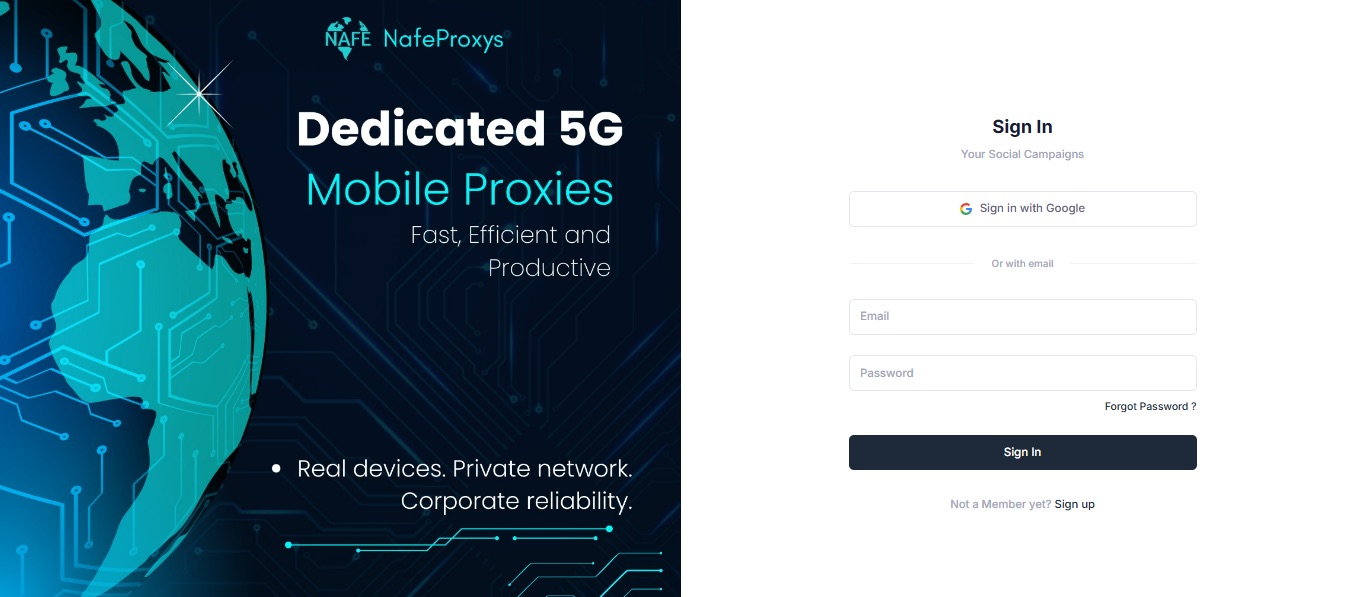
Most proxy providers focus only on access. NafeProxys is built around what really matters for ad account stability:
- control
- isolation
- consistency
With mobile infrastructure in Brazil and Spain, it supports advertisers who need:
- stable account environments
- geographic alignment
- predictable performance
- scalable operations
Real Mobile Carrier IPs (Brazil & Spain)
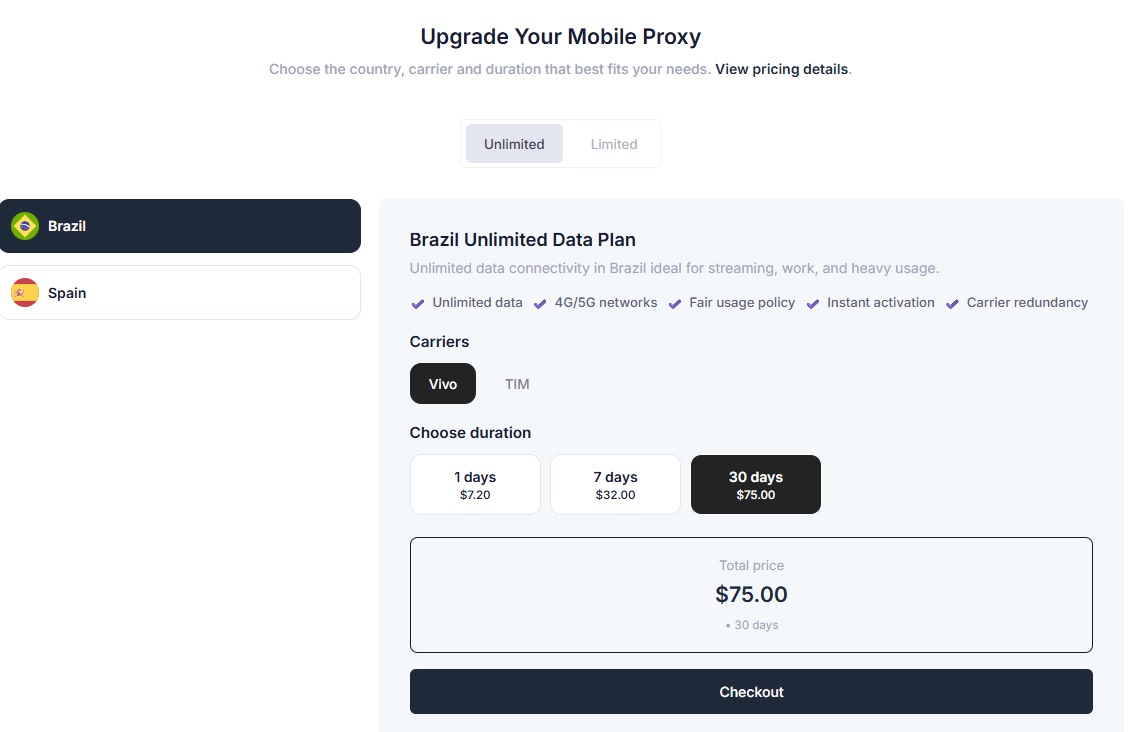
- real telecom networks
- strong trust signals
- natural usage patterns
Dedicated Connections
- one connection per account
- full isolation
- no shared environments
Controlled Rotation
- rotation only when needed
- predictable behavior
- stable sessions
Clean Sessions
- controlled IP usage
- no unintended overlap
- consistent identity over time
Full Operational Control
Most proxy providers give you access. But access alone is not enough to run stable ad operations at scale.
NafeProxys gives you complete control over how your network behaves - which is what actually determines account stability.
Secure Connection
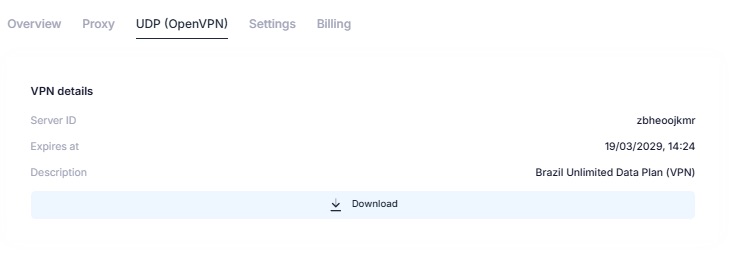
Built on OpenVPN infrastructure, supporting:
- encrypted and secure connections
- stable sessions for ad accounts
- lower risk of unexpected disruptions
Connection Monitoring (Full Visibility)
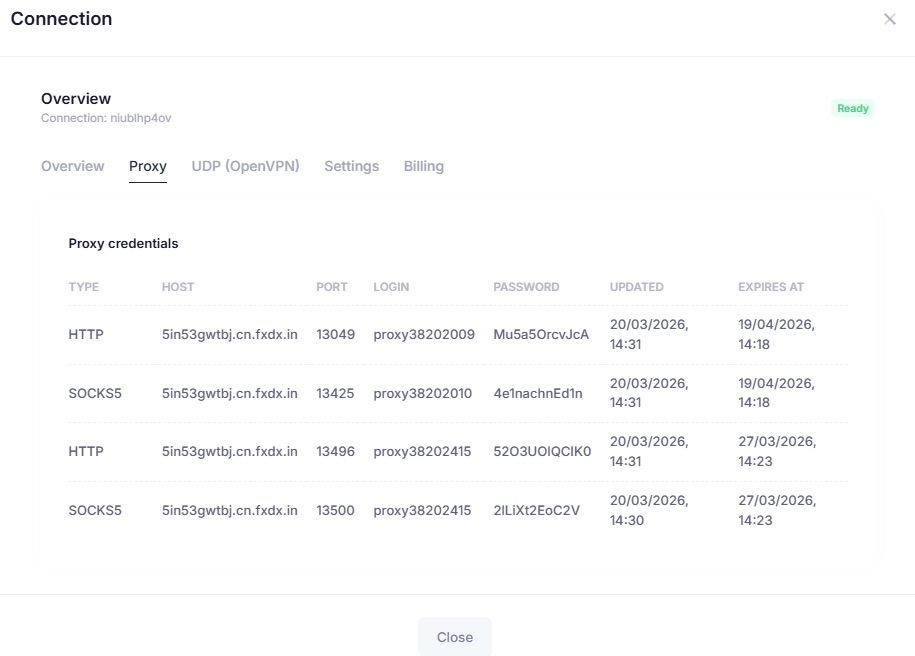
Advertisers can monitor infrastructure behavior with full visibility:
- track active sessions
- see which IP is assigned to each account
- monitor uptime and connection status
- spot instability before it turns into a ban
Smart Infrastructure Control
- manage how long each IP is used
- control rotation timing per account
- maintain behavioral consistency
- adapt the setup as the team scales
Easy Management (Rotation URL)
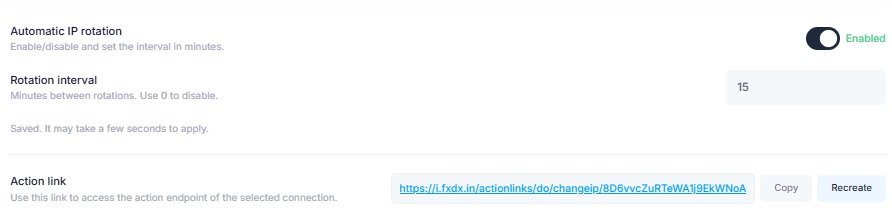
- rotate IPs via URL
- automate workflows
- integrate with your tools
- keep consistency across accounts
Why Proxy + Payment Alignment Matters More Than Ever
In 2026, platforms have become much better at detecting fragmented setups.
You can no longer treat proxy, anti-detect setup, and billing as separate parts of the launch. They now work as one system. If one layer sends weak or conflicting signals, the entire setup becomes vulnerable.
That is why experienced teams build around:
- clean and isolated proxy infrastructure
- stable anti-detect setup
- predictable behavior patterns
- trusted payment solutions like Pay2.House
When these elements are aligned, scaling ad accounts becomes far more stable and less random.
Conclusion: Ad Stability Is Built on Infrastructure
If your ad accounts:
- keep getting restricted
- behave inconsistently
- fail to scale
the problem is not your campaigns.
It is your infrastructure.
At scale, platforms don’t evaluate just your creatives or funnels. They evaluate the full system behind your activity – your proxy environment, your session behavior, and your payment setup.
This is why the difference between accounts that scale and accounts that get banned is rarely about strategy alone.
It comes down to one thing:
how consistent and controlled your entire environment is.
If you want predictable scaling instead of random bans, you need to build your setup around:
- stable and isolated proxy infrastructure
- consistent session behavior
- proper GEO alignment
- trusted payment solutions like Pay2.House
Because in modern media buying, Stable ads = Proxy + Payment + Behavior.
And if one of these elements breaks – the entire system becomes unstable.
Stop treating bans as random.
Start treating your infrastructure as your main growth lever.



 Telegram
 Email
Email









Be the first to share your opinion!
We value your feedback — share your thoughts.